Technology • 02.11.2026
Finding the Leak Is Only the Beginning: What a New Grocery Case Shows About Refrigeration Monitoring

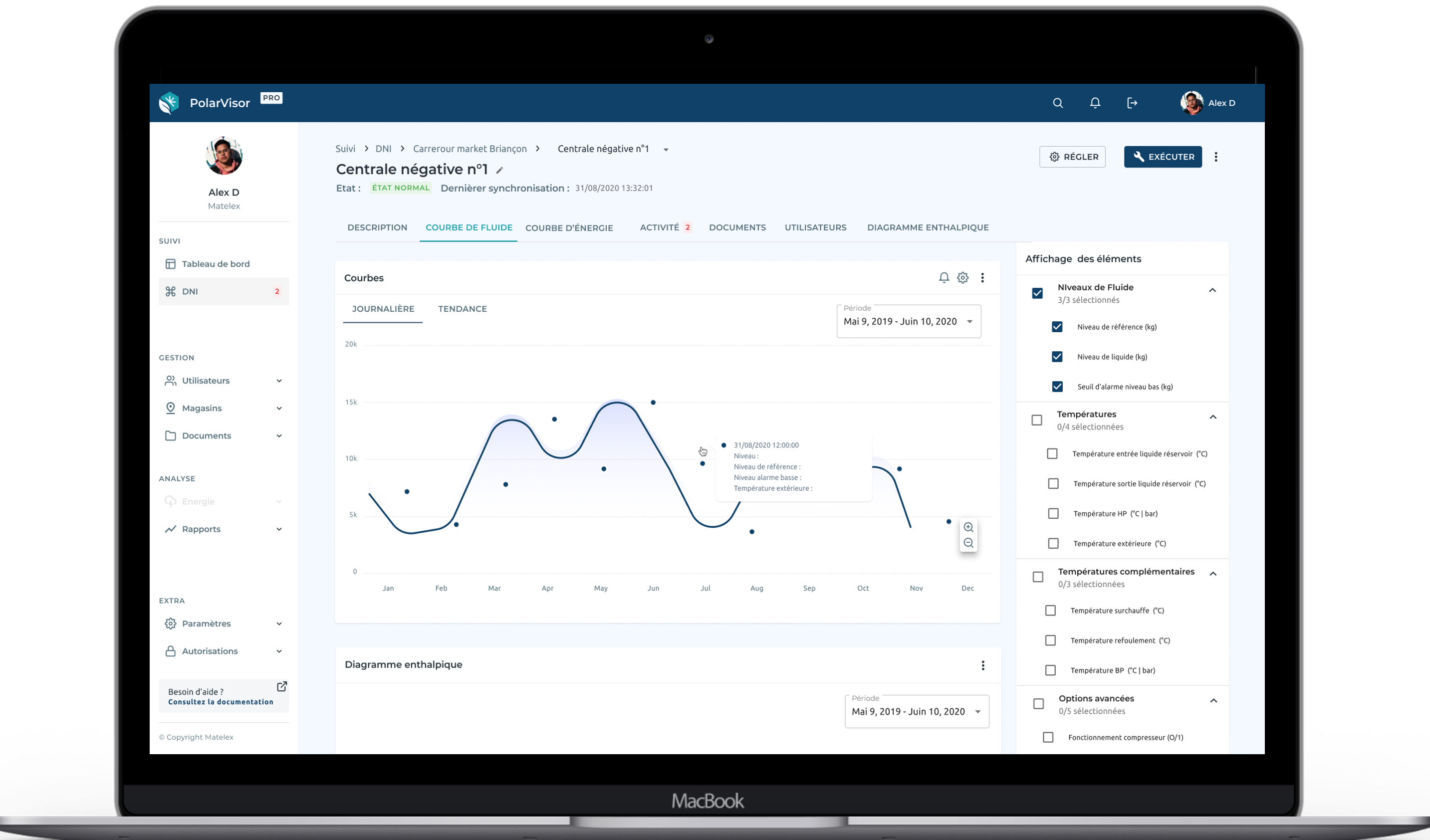
At a 59,000-square-foot grocery store in New York, a small refrigerant leak proved difficult to find. The store’s maintenance team searched multiple times without locating the source. Meanwhile, data from Matelex’s PolarVisor application continued to show a persistent loss trend.
That history gave the team a reason to keep looking. Technicians eventually used an INFICON D-TEK Pro portable detector to trace the leak to an old capped pipe that had served a cooling shelf. The pipe was repaired before the leak could continue driving up refrigerant use and operating costs.
The case illustrates two jobs that work together: continuous monitoring can show that a leak is occurring, while a technician’s on-site investigation can pinpoint and repair it. As a new federal automatic leak detection deadline approaches, that full sequence deserves attention.
What the store’s data made visible
The New York store uses R-407A refrigerant. Shortly after Matelex’s automatic leak detection system was installed, facility personnel began receiving alerts through the web app portion of the Matelex solution. Trend data indicated a small but persistent leak, even though initial searches by the in-house maintenance team could not reveal its location.
Matelex’s PolarBox hardware sensor gathers refrigeration system data, while the PolarVisor web app provides remote monitoring and a view of a system’s behavior over time. In this case, the combination provided data which helped the retailer distinguish a continuing problem from an isolated alarm. What they learned from having this Matelex automatic leak detection system installed at their store supported the decision to investigate further.
INFICON’s handheld detector served a different purpose. Once the specialized technicians used it on site, it helped them find the precise source of the leak. Continuous system data and hands-on leak detection thereby each contributed to the repair.
For retailers managing multiple stores, this distinction matters. An alert can draw attention to a potential problem, but the value comes from what happens next: reviewing the data, assigning someone to investigate, finding the source and documenting the action taken.
A January 2027 deadline for certain existing systems
Under the U.S. Environmental Protection Agency’s Emissions Reduction and Reclamation rule, certain commercial refrigeration and industrial process refrigeration appliances must have an automatic leak detection system installed and in use by January 1, 2027. The deadline applies to qualifying appliances installed from January 1, 2017, through December 31, 2025. However, for any newer qualifying appliances installed on or after January 1, 2026, owners/operators cannot wait until 2027; they must have an ALD system operational upon installation or within 30 days of installation.
Coverage depends on several factors. The appliance must have a full charge of at least 1,500 pounds and use a refrigerant containing an HFC, or a covered HFC substitute with a global warming potential or exchange value above 53. Owners should check their equipment records and the rule’s criteria before assuming a system is covered.
EPA allows qualifying direct and indirect automatic leak detection systems. Direct systems use fixed sensors to detect refrigerant in the air. Indirect systems analyze operating data, such as pressure, temperature or liquid levels, to identify signs of refrigerant loss. Either approach must meet the applicable EPA requirements; a product’s ability to send alerts alone does not establish compliance.
The New York grocery case shows how indirect monitoring can support a maintenance response.
Plan for the response, not just the installation
For operators with covered equipment, selecting and installing a system is one part of the work. EPA also requires annual auditing and calibration. Owners or operators must keep specified records for at least three years, including system installation, annual audits and calibration, alert dates, and the locations of leaks that caused alerts.
An alert starts an operational decision. Generally, the owner or operator must calculate the appliance’s leak rate within 30 days. Alternatively, they may repair an identified leak before adding refrigerant and then calculate the leak rate within that period. Different timing applies when an industrial process shutdown is necessary, and additional repair requirements can apply based on the calculated leak rate.
That makes alert routing and recordkeeping practical questions, not administrative afterthoughts. Who receives an alert when a store is closed? Who reviews the trend and calls a technician? Where are the investigation, repair and calibration records kept? A monitoring system is most useful when those responsibilities are clear before an alarm arrives.
Four questions to ask now
With the deadline approaching, refrigeration owners can begin with a focused review:
- Do your installations qualify? For each one, confirm full charge, refrigerant and installation date.
- Do your current detection system(s) meet the rule? Check the applicable direct or indirect system requirements and installation instructions.
- What happens after an alert? Be sure you have clearly assigned responsibilities for reviewing data, investigating the equipment, calculating leak rates when required, and arranging repairs.
- Can the team retrieve the records? Decide where installation, audit, calibration and alert information will be stored and how records will be kept up-to-date.
At the New York store, persistent trend data kept a hard-to-find leak on the maintenance team’s agenda until technicians located and repaired it. That is the larger lesson for refrigeration operators reviewing their ALD responsibilities: detection works best as the beginning of a clear, documented response.
Talk with Matelex US about using PolarBox and PolarVisor to improve visibility into your refrigeration systems and support your leak response process.